News
Microsoft Bot Framework Boosts Python SDK for Conversational AI Apps
Updated Python functionality heads a list of enhancements to Microsoft's Bot Framework SDK, facilitating conversational artificial intelligence in a number of application channels.
The Microsoft Bot Framework features open source SDKs, developer tools and services to help coders build, test and connect conversational AI bots for apps like Skype, Microsoft Teams, Slack, Facebook Messenger and so on.
In a July update, Microsoft released Bot Framework SDK 4.5 and a preview of v4.6, along with updated tools and Azure Bot Service channels for building intelligent, enterprise-grade bots. The update includes an enhanced Bot Framework SDK for Python, which the company said it offers as part of its initiative to let developers code in their favorite languages. The Python SDK update features:
- OAuth support
- Prompts support
- CosmosDB support
- Major functionality in SDK 4.5
- New samples
Beyond the Python SDK update, many other new features were announced for the general framework SDK and the overall Bot Framework, which is illustrated here:
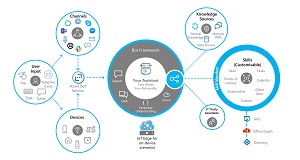 [Click on image for larger view.] Microsoft Bot Framework (source: Microsoft).
"Addressing customers' and developers' ask for better testing tools, the July version of the SDK introduces a new unit testing capability," said Yochay Kiriaty, principal program manager, Azure Platform," in a July 18 blog post. "The Microsoft.Bot.Builder.testing package simplifies the process of unit testing dialogs in your bot. Check out the documentation and samples."
The Bot Framework SDK 4.6 preview updates Adaptive Dialog, helping developers dynamically update conversation flow based on context and events. "This is especially handy when dealing with conversation context switches and interruptions in the middle of a conversation," Kiriaty said.
For Bot Framework channels, a new Direct Line Speech preview has been added to the 13 supported channels (the aforementioned Skype, Microsoft Teams, Slack and so on).
"This is a new channel designed for voice-first experiences for your Bot Framework utilizing Microsoft's Speech Services technologies," Kiriaty said. "The Direct Line Speech channel is a native implementation of speech for mobile applications and IoT devices, with support for Text-to-speech, Speech-to-text, and custom wake words. We're happy to share that we're now opening the preview to all Bot Framework customers."
Microsoft also announced many other enhancements, affecting the Virtual Assistant family of services, including a Virtual Assistant Solution Accelerator, a public preview of Dynamics 365 Virtual Agent for Customer Service, Chat for Dynamics 365 and more.
About the Author
David Ramel is an editor and writer at Converge 360.