News
Devs Demand Visual Studio 2022 Ditch Old .NET Framework Dependencies
Developers commenting on a Microsoft post about performance improvements in the upcoming .NET 8 demanded the company end Visual Studio 2022's dependency on the old .NET Framework.
The comments came in the recent, stunningly large post published last week by Microsoft's Stephen Toub, who annually amazes developers with the breadth of detail and sheer size of his .NET performance posts. This one garnered some 100 comments, many of which just thanked him for his mammoth efforts (for example, last year's post on .NET 7 was more than 76,000 words).
However, there was also this comment: "So many great stuff. However it's quite sad that even though .NET is getting faster and faster with each release, Visual Studio is stuck on the old .net framework which is so much slower than the latest .NET releases. Is Microsoft going to address this issue?"
That question, which was upvoted five times (a lot in this context), prompted a response from a Microsoft employee who said, "I know Visual Studio has been looking into using .NET 8, but I can't say if or when you might see something noteworthy from this effort."
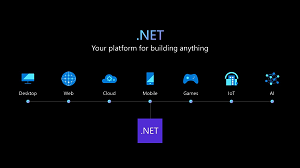 [Click on image for larger view.] .NET (source: Microsoft).
Microsoft's VS 2022 system requirements guidance says: "NET Framework 4.5.2 or above is required to install Visual Studio. Visual Studio requires .NET Framework 4.8 to run. If .NET Framework 4.8 isn't already installed, it will be installed during setup."
The last release of the old, proprietary, Windows-only .NET Framework was v4.8.1, dating back to Aug. 9 of last year.
Of course, the IDE can be used to create apps to run on the latest open source, cross-platform successor, the ".NET Core" line that evolved into just .NET 5, .NET 6 and so on.
But those .NET Framework dependencies irked more than the original complainant in the comments section.
"Not only performance, the dependency on .NET Framework for in-process plugins," said one commenter, who added, "However given how much time it took to adopt 64 bits, and there are still issues running WPF on .NET Core (including compatibility with components designed for .NET Framework), I don't see it happening any time soon."
That elicited a follow-on response:
Both WinForms and WPF have transitioned to .NET, so I think it's time to draw a line in the sand with the new .NET version of Visual Studio and drop support for .NET Framework projects & plugins.
I still have WinForms projects that are .NET Framework, but I don't think it's unreasonable to tell people that if they want to stick with old frameworks, they have to pay the price of sticking with older versions of Visual Studio.
Visual Studio Magazine asked Microsoft for a comment on the matter. More than four hours later, they declined.
About the Author
David Ramel is an editor and writer at Converge 360.