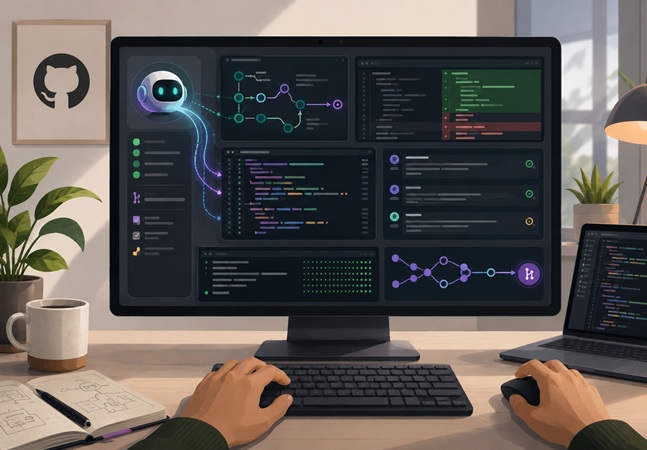
GitHub's brand-new Copilot desktop app, in technical preview, handled a small Blazor issue from planning through pull request creation, but the hands-on test also showed why developers still need to verify agent work in the running app before merging.

A journalist using GitHub Copilot Pro details how a broken editorial workflow on day one of usage-based billing led to runaway token consumption, a projected $180 monthly bill, and practical tactics for cutting AI credit burn.
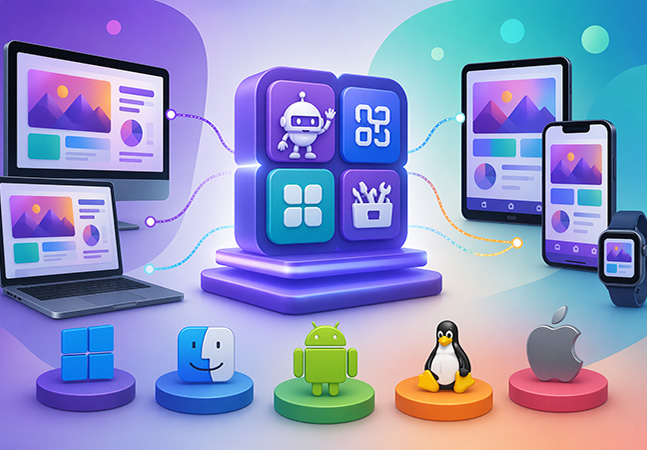
Microsoft Senior Content Developer Alvin Ashcraft explains how to use .NET MAUI, the MAUI Community Toolkit and MVVM Toolkit to speed up cross-platform app development with practical patterns for XAML, C# Markup and device features

Jason Bock shares practical guidance for building faster .NET applications, avoiding modernization pitfalls, and using proven performance resources to keep improving over time.
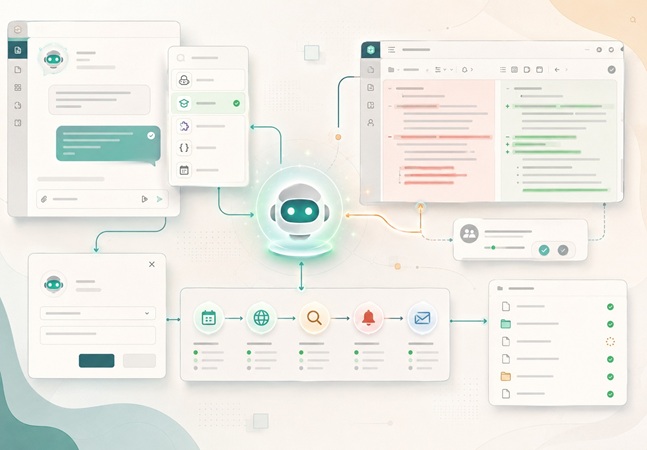
This hands-on build shows how Agent Mode in Visual Studio 2026 -- Insiders now, stable soon --can create and operationalize a custom Copilot skill that automates feature-parity tracking with practical system integration and measurable reporting value.
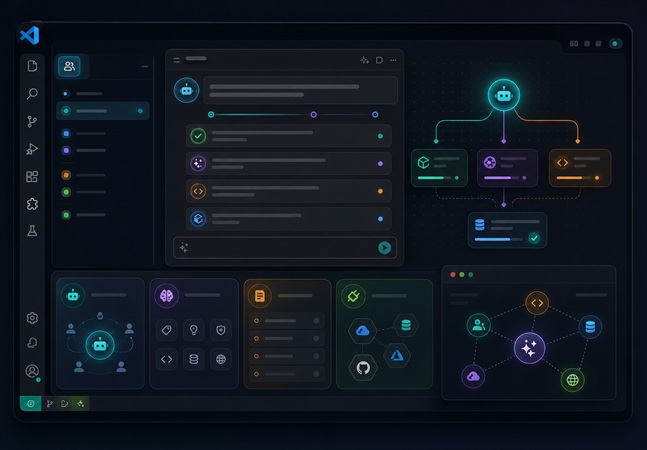
VS Code 1.120 brings the Agents window to Stable preview, giving AI agent sessions and customizations a dedicated workspace.

Simona Liao and Leah Tran, product managers at Microsoft, discuss how GitHub Copilot in Visual Studio has evolved from a code completion tool into an agent-driven development workflow -- and share practical tips for developers and teams looking to integrate AI into their everyday processes.
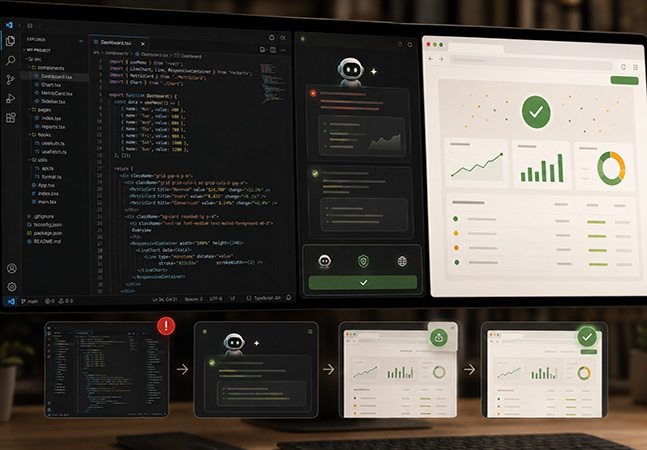
A hands-on Blazor test shows how VS Code 1.119 makes agent browser sharing more visible, permissioned and chat-driven.
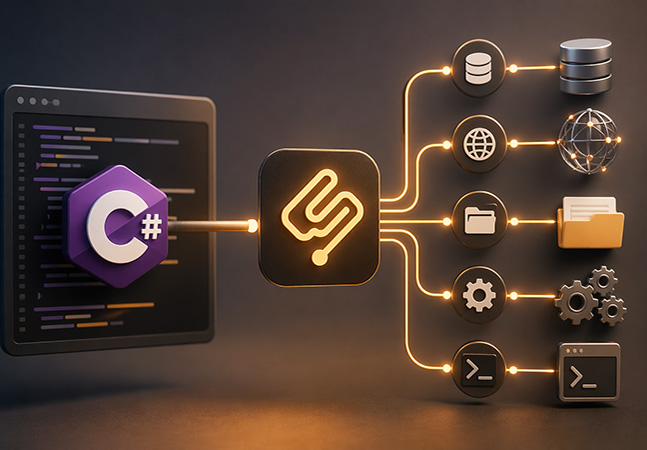
Rockford Lhotka previews his Visual Studio Live! San Diego session, "MCP Magic," and explains why the Model Context Protocol is becoming a key building block for AI agents. In this Q&A, he discusses how C# developers can build MCP servers, connect them to agents, and design tool layers that are useful, scalable, and production-ready.

Microsoft Product Manager Mike Kistler previews his Visual Studio Live! session on how MCP servers give .NET developers a universal standard for connecting AI models to external data and tools -- and how to build them with the C# SDK. Microsoft's Leslie Richardson is a co-presenter.

Reflecting a broader trend of Microsoft embracing Claude AI, recent VS Code updates show the company accommodating Claude Code beyond model selection, with support for Claude-specific instruction files, rules, agents, skills, hooks and plugin conventions.

Microsoft's Data API Builder is designed to help developers expose database objects through REST and GraphQL without building a full data access layer from scratch. In this Q&A, Steve Jones previews his upcoming Visual Studio Live! San Diego 2026 session on how teams can use the tool with SQL Server and PostgreSQL to accelerate app development.
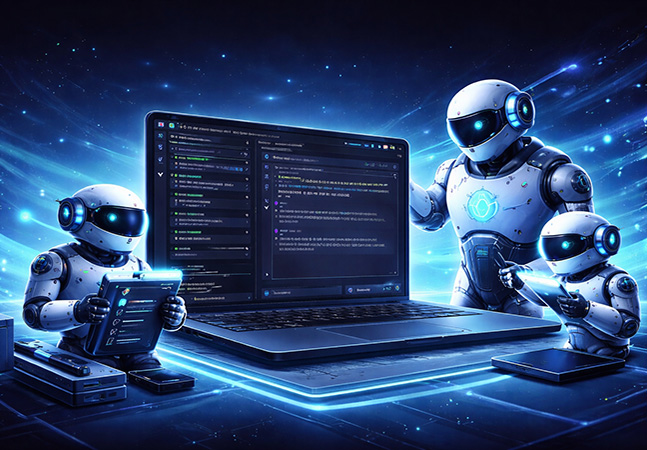
Now shipping in the VS Code Insiders build, Microsoft's new Visual Studio Code Agents preview offers an early look at a separate companion app for agent sessions, approvals, workspace discovery, and supervised review loops.

Amber Vanderburg discusses how engineering leaders can spot and fix the “silent bugs” in team dynamics before they turn into bigger delivery problems.

Christian Wenz explains why the Backends for Frontends (BFF) pattern is emerging as a more secure authentication model for single-page applications.

A proof of concept used OpenClaw's localhost dashboard inside VS Code's integrated browser to compare it directly with Copilot on the same SKILL.md file, finding that OpenClaw delivered broader, more redesign-oriented analysis while Copilot focused on narrower, maintenance-minded fixes.
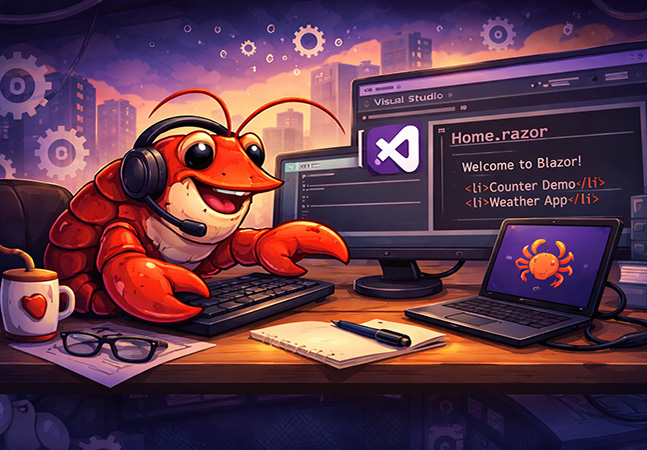
What happens when a self-hosted space lobster tries to work in Visual Studio 2026? OpenClaw finds terminal access, project insight, and just enough routing weirdness to send a message to itself instead of editing code -- which, honestly, is not not on-brand.
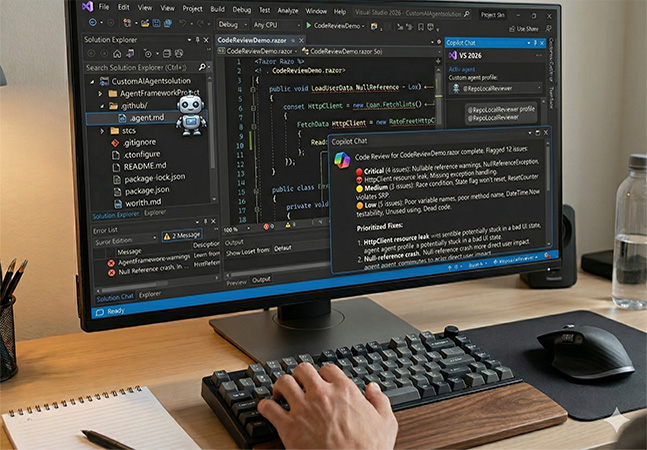
A quick hands-on proof of concept shows how Visual Studio's new custom-agent framework can be aimed at a real Blazor project, along with what else is new in the March update.

A hands-on test found that OpenClaw can work with VS Code for file-based drafting and source-driven synthesis, but the current experience is still centered on a local gateway and workspace model rather than a polished native editor integration

This hands-on PoC shows how I got an open-source model running locally in Visual Studio Code, where the setup worked, where it broke down, and what to watch out for if you want to apply a local model to a real workflow.