
Amber Vanderburg discusses how engineering leaders can spot and fix the “silent bugs” in team dynamics before they turn into bigger delivery problems.

Christian Wenz explains why the Backends for Frontends (BFF) pattern is emerging as a more secure authentication model for single-page applications.

A proof of concept used OpenClaw's localhost dashboard inside VS Code's integrated browser to compare it directly with Copilot on the same SKILL.md file, finding that OpenClaw delivered broader, more redesign-oriented analysis while Copilot focused on narrower, maintenance-minded fixes.
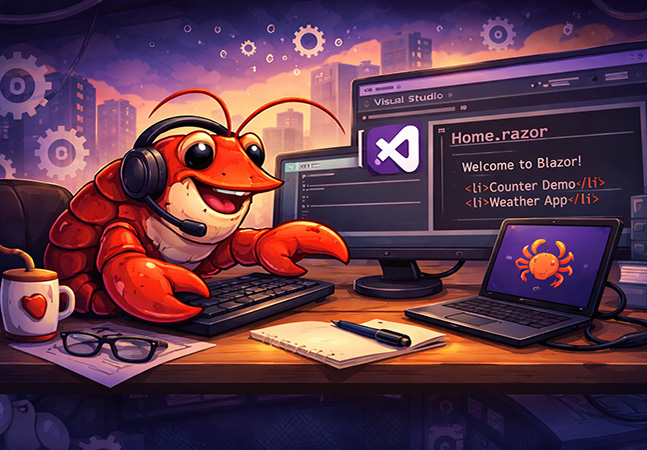
What happens when a self-hosted space lobster tries to work in Visual Studio 2026? OpenClaw finds terminal access, project insight, and just enough routing weirdness to send a message to itself instead of editing code -- which, honestly, is not not on-brand.
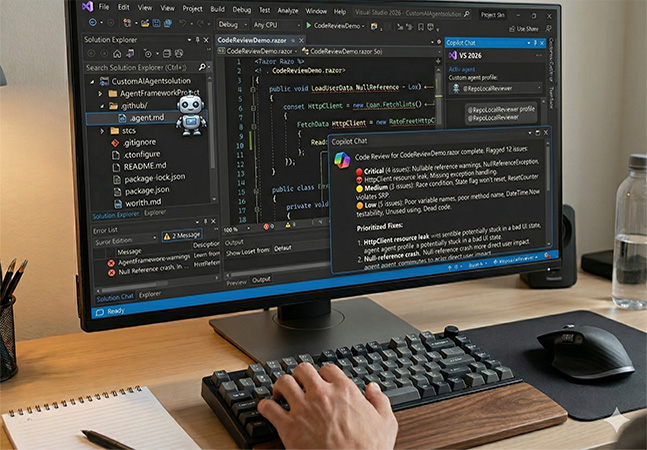
A quick hands-on proof of concept shows how Visual Studio's new custom-agent framework can be aimed at a real Blazor project, along with what else is new in the March update.

A hands-on test found that OpenClaw can work with VS Code for file-based drafting and source-driven synthesis, but the current experience is still centered on a local gateway and workspace model rather than a polished native editor integration

This hands-on PoC shows how I got an open-source model running locally in Visual Studio Code, where the setup worked, where it broke down, and what to watch out for if you want to apply a local model to a real workflow.

VS Code 1.111 Autopilot is not just a no-prompts mode. In testing, it handled a blocking question that still stopped Bypass.

Microsoft's AI Toolkit extension for VS Code now lets developers scaffold a working MCP server in minutes. Here's what that looks like in practice -- including the parts that don't work, and a simpler path that does.

VS Code's AI Toolkit and Microsoft Foundry can speed up agent development, but real-world success often depends on picking the right runtime and region, keeping tool-driven context under control, and designing around quotas, throttling, and uneven model/tool availability.

Having long ago seen the handwriting on the wall for the journalism profession with the debut of GenAI, I decided to just cut to the chase and build my replacement now.
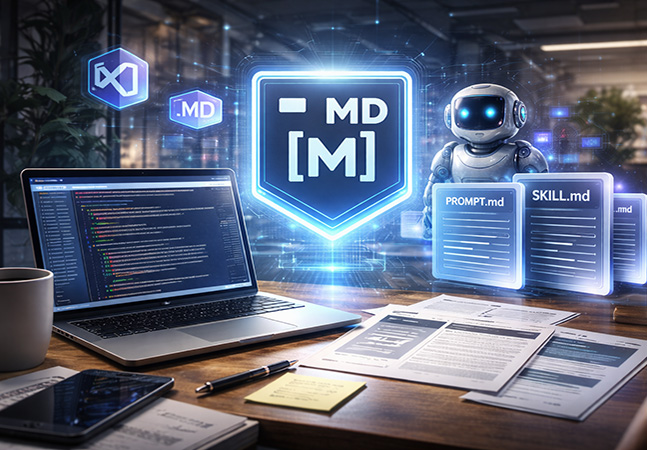
Markdown is emerging in VS Code and Visual Studio 2026 as a version-controlled instruction layer that governs AI agents, reusable prompts and modular skills alongside traditional documentation.

This head-to-head test compared Amazon Q Developer and GitHub Copilot Pro using a real-world editorial workflow to evaluate their performance as "agentic" assistants beyond simple coding. Both tools utilized the Claude 3.5 Sonnet model for these tests.

Chad Green explores how intentional design patterns determine whether serverless architectures deliver on their promises of scalability, resilience, and cost efficiency.

I was in the middle of a complicated agentic AI project in VS Code when I unknowingly hit the monthly premium request quota for my Copilot Pro subscription. This triggered an automatic fallback to a less capable model, which caused a sudden and dramatic drop in output quality. That triggered hours of angst and consternation and an argumentative rift with my beloved Chat buddy. Always pay attention the fine print.
Microsoft MVP Philip Japikse discusses how ASP.NET Core Razor Pages in .NET 10 provides a streamlined, page-centric development model for building maintainable web applications, leveraging modern features like dependency injection, configuration management, and environment awareness .

VS Code 1.109’s agent infrastructure upgrades enable structured, stateful workflows with rule enforcement, incremental approvals and patch-based edits instead of one-shot AI responses.
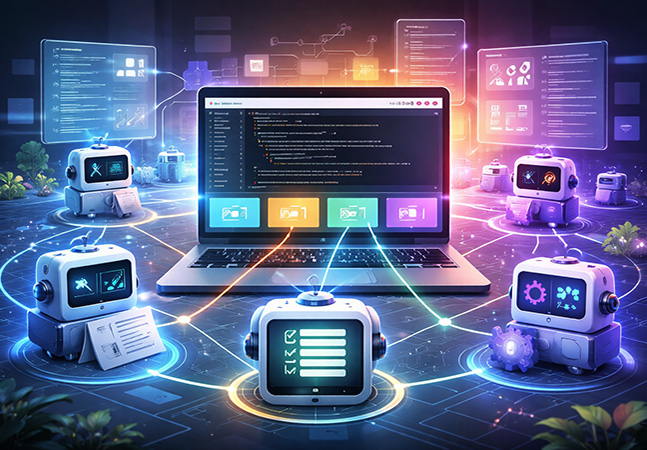
A proof of concept shows how multi-agent orchestration in Visual Studio Code 1.109 can turn a fragile, one-pass AI workflow into a more reliable, auditable process by breaking long tasks into smaller, verifiable steps.

A deep dive into how attackers exploit overlooked weaknesses in CI/CD pipelines and software supply chains, and how .NET and DevOps teams can use automation and modern practices to detect and mitigate stealthy threats before they reach production.
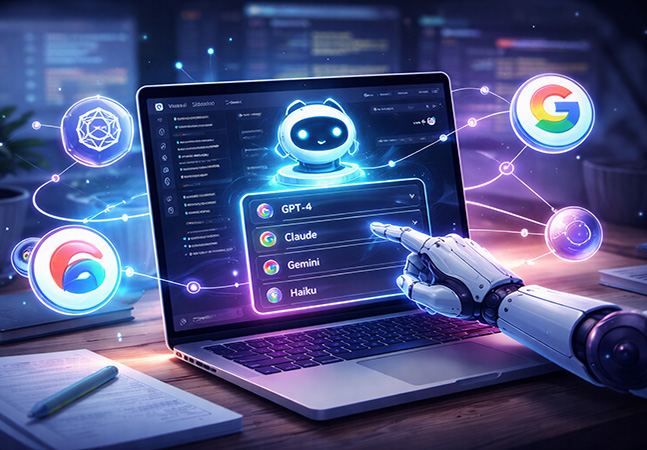
Copilot's 'Auto' model picker in VS Code and Visual Studio currently routes to whatever model is most available and policy-compliant--not the one best matched to your prompt--while Microsoft/GitHub say task-aware routing is planned but not yet shipped.