News
What's Coming Up for Azure DevOps Boards, Repos, Pipelines and More
While Microsoft's Azure DevOps team has been busy lately, introducing Scalar to speed up Git operations and other initiatives, much more work is planned for the cloud-based successor to Visual Studio Team Services (VSTS).
Scalar, in cased you missed it, is a .NET Core application coded in C# and developed on GitHub to improve the performance of Git commands via the setting of recommended config values and background maintenance operations.
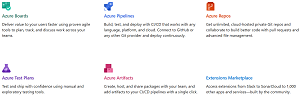 [Click on image for larger view.] Azure DevOps (source: Microsoft).
To see what's coming up for Azure DevOps, Microsoft maintains the Azure DevOps Roadmap, updated earlier this month to reflect planned work throughout the first quarter of 2020, which has about five weeks left. Here's a look at planned improvements:
- Azure Boards: "We've heard your feedback about making the Required fields error experience more friendly. We will make the errors more visible, easily understood, and actionable to help you quickly fill in required information, both on your board card as well as within your work item form." See more about the More actionable error experience for Required fields item.
- Azure Repos: "We will convert the pull request details pages to a more modern, fast, and mobile-friendly UI. This will include the overview tab, files tab, commits tab, etc. In addition, we will add several features that will help you review pull requests faster and improve the overall pull request experience." See more about the Upgraded pull request web experience item.
-
Azure Pipelines:
- Reporting: "You will be able to make a copy of a dashboard within a team to another team, or to another team project. This will help you save time when replicating your dashboards across teams." See more about the Copy Dashboard item.
- Administration: "Azure DevOps Auditing is now in public preview! You can learn more about it here. In this quarter we'll be working on a streaming feature which will let you send your logs to first- and third-party Security Incident and Event Management (SIEM) tools. The use of these tools along with auditing will give you transparency into your workforce and allow for anomaly detection, trend visualization, and more." See more about the Streaming for Azure DevOps Auditing item.
All of the above, along with work planned for Q2 2020 and after, is covered in the Azure DevOps Feature Timeline.
For more on using Azure DevOps and Visual Studio to become a better developer, see this new Q&A with Robert Green, an expert independent consultant and host of the Visual Studio Toolbox show on Microsoft's Channel 9 video site.
About the Author
David Ramel is an editor and writer at Converge 360.