News
Python in VS Code Team Is Breaking Up Big Extension
Microsoft's Python in Visual Studio Code dev team has begun to break up its big, super-popular extension into separate tools in the regular monthly update for April 2022.
The team manages the Python extension in the VS Code marketplace, providing IntelliSense, linting, debugging and so on. It's by far the most popular tool in the marketplace with more than 53 million installs, nearly 20 million more than any other extension.
In the April 2022 release post, the team announced the first extension to be separated from the main extension, Pylint.
"Our team is working towards breaking the tools support we offer in the Python extension into separate extensions, with the intent of improving performance, stability and no longer requiring the tools to be installed in a Python environment -- as they can be shipped alongside an extension," said Karthik Nadig. "The first one we started to work on is Pylint."
As its name suggests, the tool provides linting functionality, the highlighting of syntactical and stylistic problems in Python source code in order to help coders identify and correct subtle programming errors or possibly error-prone unconventional coding practices.
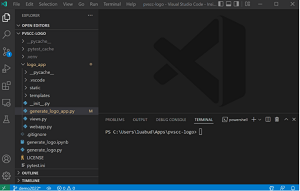 [Click on image for larger, animated GIF view.] Pylint in Action (source: Microsoft).
It's unclear just how many such tools are bundled into the main Python extension or how many will be separated out, but documentation shows that Pylint is among the various projects the tool is integrated with:
- Debugging support: Django, Flask, gevent, Jinja, Pyramid, PySpark, Scrapy, Watson
- Formatting: autopep8, black, yapf
- Interpreter support: conda, direnv, pipenv, poetry, pyenv, venv, virtualenv
- Linting: bandit, flake8, mypy, prospector, pylint, pydocstyle, pylama
- Testing: pytest, unittest
Other highlights of the latest update include:
- Interpreter display in the status bar moved to the right: The selected interpreter version display was moved toward the right side in the status bar, next to the language status item Python. To avoid cluttering up the status bar, it only appears when a Python or a settings.json file is open.
- Simpler way to create empty Python and Jupyter Notebook files: Developers can use the "File: Create New ..." command in the command palette to create empty Python or Jupyter notebook files. The same functionality comes with clicking on "New File ..." from VS Code's welcome page.
- Fix for running and debugging files with conda environments: Issues that caused a regression when running files in activated conda environments have been fixed.
About the Author
David Ramel is an editor and writer at Converge 360.