News
What's New for Java Tooling in VS Code, Azure Cloud
Java on Visual Studio Code gets a new tool to its extension pack, while Java on Azure upgraded the Azure Toolkit for IntelliJ and more in new regular updates for both properties.
The August 2024 update for Java on Visual Studio Code ladles some Gradle into to the dev team's Extension Pack for Java, specifically the Gradle for Java extension for the popular build automation tool, which previously came separately.
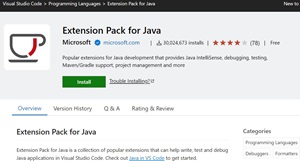 [Click on image for larger view.] VS Code Extension Pack for Java (source: Microsoft).
Nick Zhu, senior program manager, explained the team improved the Gradle tool in the process by reducing the number of JVM procesess that get spawned to provide different features. Merging multiple processes into on decreased the use of computation resources and reduced memory consumption.
Gradle also figures in another new feature, the ability to delegate "Debug Test" to Gradle. "In our previous blog, we mentioned supporting delegating test to Gradle for 'Run Test' scenario in our extension, which allows you to execute tests in Visual Studio Code Java via the Gradle test runner, this will ensure consistency of the test output with Gradle CLI," Zhu said. "In our latest release, we have also enabled 'Debug Test' as well."
Furthermore, in an updated walkthrough for onboarding users to the extension via a multi-step checklist, "Users can now learn how to access code actions and source actions among these steps."
Java on Azure
As indicated, this team is responsible for the Azure Toolkit for IntelliJ, which, even though developed by Microsoft, appears in the marketplace of JetBrains, developer of the tool.
Leading the news here is managed identity support for Azure App Service, one of the services it supports along with Azure Functions, Azure Spring Apps, Azure Kubernetes, Azure Container Apps, Virtual Machines, Azure Database for MySQL, Azure Cosmos DB, SQL Server, Azure Storage and Application Insights.
"In the latest release, we have added Managed Identity support for Azure Web Apps in our toolkit," said Jialuo Gan, program manager. "This feature offers developers the flexibility to use managed identities for authenticating and accessing Azure resources, such as Azure Storage, without the need to manage credentials directly. It helps reduce the risk of credential exposure and streamlines the secure integration of various services. When deploying your Java applications to Azure App Service in our toolkit, you will be prompted to assign roles to access Azure resources."
He also announced the general availability of Java experiences on Azure Container Apps.
"These features enable developers to configure, monitor, and troubleshoot Java applications on Azure Container Apps with ease," Gan said. "To learn more, please visit this blog and watch the video to get started."
The Extension Pack for Java for VS Code has been installed more than 30 million times, while Gradle for Java has been installed some 8.6 million times. The JetBrains marketplace doesn't provide such numbers.
About the Author
David Ramel is an editor and writer at Converge 360.