News
Microsoft Heralds 'Age of AI Agents' at Build 2025
Microsoft kicked of its Build 2025 developer conference with a focus on agentic AI to mark the rapid transformation of software development that eliminates all that pesky human typing, if not reasoning -- yet.
Communications exec Frank X. Shaw summed it all up in his May 19 post, "Microsoft Build 2025: The age of AI agents and building the open agentic web."
"We've entered the era of AI agents," he said. "Thanks to groundbreaking advancements in reasoning and memory, AI models are now more capable and efficient, and we're seeing how AI systems can help us all solve problems in new ways."
At the forefront of this effort is Microsoft-owned GitHub and its Copilot AI coding assistant ecosystem, which has seen huge recent advancements -- and now a new coding agent.
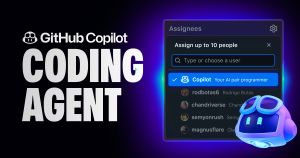 [Click on image for larger view.] GitHub Coding Agent (source: GitHub).
"Embedded directly into GitHub, the agent starts its work when you assign a GitHub issue to Copilot or prompt it in VS Code," explained GitHub CEO Thomas Dohmke. "The agent spins up a secure and fully customizable development environment powered by GitHub Actions.
"As the agent works, it pushes commits to a draft pull request, and you can track it every step of the way through the agent session logs. Having Copilot on your team doesn't mean weakening your security posture -- existing policies like branch protections still apply in exactly the way you'd expect. Plus, the agent's pull requests require human approval before any CI/CD workflows are run, creating an extra protection control for the build and deployment environment."
With its seamless integration, the new Copilot agent is designed to autonomously handle a broad spectrum of development tasks, ranging from implementing new features to fixing bugs and improving documentation. It leverages deep contextual understanding by analyzing related issues, pull requests, and repository-specific instructions, ensuring its contributions align with project goals and coding standards.
The agent's workflow is further enhanced by its ability to interact with a variety of developer tools and services-such as test runners, static analyzers, and security scanners-through secure protocols. This enables it to validate its own work, surface results directly in the developer workflow, and maintain transparency at every step. Teams can also customize the agent's behavior using prompt files and instructions, ensuring consistent output and adherence to organizational best practices.
Specific details include:
- Autonomous Task Handling: Completes assigned tasks such as feature development, bug
- Plan-Based Execution: Generates a step-by-step plan before coding begins, giving developers visibility and the ability to modify direction early.
- Interactive Development Sessions: Developers can pause, resume, or redirect the agent mid-session, allowing for iterative and guided collaboration.
- Live Commentary: Provides inline explanations and reasoning for its decisions, helping developers understand the rationale behind code changes.
- Copilot Workspace Integration: Fully compatible with GitHub's Copilot Workspace, enabling seamless transition from issue comprehension to implementation.
- Cross-Repo Awareness: Can reference linked repositories or monorepos when solving tasks that span multiple codebases.
- Natural Language Feedback Loop: Accepts conversational prompts to adjust tone, style, or strategy during task execution.
- Security-Aware Extensions: Can interface with enterprise security systems (e.g., custom linters, policy engines) to proactively catch violations.
Other AI-related news from Build 2025 includes new features for Azure AI Foundry and more:
-
Azure AI Foundry expands its model ecosystem with new models from xAI, including Grok-3 and Grok-3-mini, giving developers a broader selection of foundation models for diverse AI applications.
More here.
-
Azure AI Foundry introduces Model Router (preview), an intelligent system that automatically selects the best AI model for a given prompt, optimizing for output quality and cost-efficiency.
More here.
-
Azure AI Foundry Agent Service is now generally available, enabling developers to orchestrate multiple specialized AI agents collaboratively, with unified SDKs, Agent-to-Agent (A2A) communication, Model Context Protocol (MCP) support, and built-in observability for performance, cost, and safety.
More here.
-
Microsoft Entra Agent ID (public preview) provides secure, managed identities for AI agents, enhancing governance, compliance, and risk management. With Microsoft Entra Agent ID, agents that developers create in Microsoft Copilot Studio and Azure AI Foundry are automatically assigned an identity, enabling secure management and enhanced governance, compliance, and risk controls.
More here and here.
-
Azure AI Foundry Local (preview) brings instant, on-device AI capabilities to Windows 11 and MacOS, enabling fast, private AI development and inferencing without cloud dependency.
More here.
-
Windows AI Foundry launches as a unified AI platform for Windows, covering the full AI development lifecycle-from model selection and optimization to deployment-integrating Foundry Local, Ollama, and NVIDIA NIMs for seamless access to open-source models across diverse Windows hardware.
More here.
-
Windows AI Foundry introduces ready-to-use AI APIs for Copilot+ PCs, supporting language and vision tasks such as text intelligence, image description, text recognition, custom prompts, and object erase, powered by inbox models optimized for new silicon.
More here.
-
Copilot Studio launches multi-agent orchestration (public preview), allowing AI agents to delegate and collaborate on complex workflows across systems, teams, and departments.
More here.
-
Copilot Studio Agent Store debuts, enabling users to discover, pin, and deploy both Microsoft and third-party agents-including new reasoning agents like Researcher and Analyst-directly within their workflows.
More here.
-
Microsoft 365 Copilot Tuning and new Create experience allow organizations to customize and train Copilot using internal data and low-code tools, with Copilot Notebooks now generally available for enhanced AI-powered workflow customization.
More here.
-
Agent memory and contextual awareness receive major upgrades, enabling agents to maintain persistent context and improve recall across workflows, which enhances agent reliability and user experience.
More here.
-
New pre-built agents, custom agent building blocks, and enhanced multi-agent capabilities are now available, supporting more secure, productive, and scalable agentic solutions for both individuals and enterprises.
More here.
-
Edit, a new open-source text editor for the command line, is released to support AI-powered developer workflows.
More here.
-
Azure Cosmos DB introduces new AI-powered features to accelerate MongoDB development on Azure, enhancing developer productivity and database performance.
More here.
Microsoft also made several announcements not related to AI at Build 2025. Stay tuned for more from the conference, which runs through Thursday.
About the Author
David Ramel is an editor and writer at Converge 360.