News
Azure AI Foundry Gets ChatGPT-5, Previews Browser Automation
Microsoft's latest update to Azure AI Foundry introduces the GPT-5 model family, previews a new Browser Automation tool, and expands the regional footprint of its Agent Service.
Azure AI Foundry is Microsoft's managed platform for building, customizing, and deploying generative AI applications using a catalog of models, agent services, and developer tools in the cloud.
GPT-5 Family Now Available
The August 2025 update adds gpt-5, gpt-5-mini, gpt-5-nano, and gpt-5-chat to Azure AI Foundry. Registration is required for gpt-5, which supports reasoning across long-horizon tasks with up to ~272K tokens of context. The gpt-5-chat variant enables multimodal conversational use with ~128K tokens. The mini and nano models focus on real-time tool calling and ultra-low latency tasks.
Pricing differs by model and deployment type. For global deployments, gpt-5 is $1.25 per million input tokens and $10.00 per million output tokens, while gpt-5-nano is priced at $0.05 per million input tokens and $0.40 per million output tokens.
| Model |
Input (Global) |
Cached Input (Global) |
Output (Global) |
Input (Data Zone) |
Cached Input (Data Zone) |
Output (Data Zone) |
| gpt-5 |
$1.25 |
$0.125 |
$10.00 |
$1.375 |
$0.1375 |
$11.00 |
| gpt-5-mini |
$0.25 |
$0.025 |
$2.00 |
$0.275 |
$0.0275 |
$2.20 |
| gpt-5-nano |
$0.05 |
$0.005 |
$0.40 |
$0.055 |
$0.0055 |
$0.44 |
| gpt-5-chat |
$1.25 |
$0.125 |
$10.00 |
-- |
-- |
-- |
GPT-5 also introduces "freeform tool calling," which, according to Microsoft, "enables the model to send raw text payloads like Python scripts, SQL queries, or configuration files directly to external tools without needing to wrap them in structured JSON--eliminating rigid schemas and reducing integration overhead."
New and Updated Models
- Black Forest Labs FLUX.1 Kontext [pro] and FLUX1.1 [pro]: multimodal and text-to-image models with faster generation and improved editing.
- Mistral Document AI: a serverless OCR solution that preserves layouts, tables, and figures and returns structured outputs in JSON or markdown-like tables.
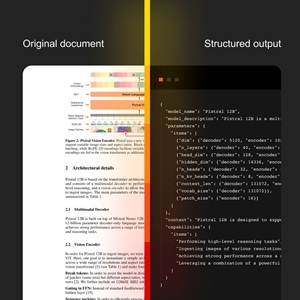 [Click on image for larger view.] Mistral Document AI Structured Output (source: Microsoft).
- Sora API: now supports image-to-video generation and region-specific inpainting, and expands to East US 2 and Sweden Central.
- VibeVoice (coming soon): long-form, multi-speaker text-to-speech designed for expressive dialogue and podcast-like audio.
- OpenAI gpt-oss: open-weight models gpt-oss-120b and gpt-oss-20b, with the smaller variant also usable locally through Foundry Local and Windows AI Foundry.
Agent Service and Browser Automation
Azure AI Foundry's Agent Service is now available in four additional Azure regions: Brazil South, Germany West Central, Italy North, and South Central US, bringing total support to 17 regions.
In parallel, Microsoft introduced a Browser Automation tool in public preview. The tool allows agents to interact with real browsers via natural language, handling tasks like navigation, form-filling, and appointment booking. It runs inside a customer's Azure subscription using a Microsoft Playwright Testing Workspace, which avoids VM or standalone browser management and makes the automation flow more resilient than pixel-based scripting.
Platform and SDK Updates
The Model Router now supports the GPT-5 series for cost and quality optimization. "Access is limited for the latest router version--request via the GPT-5 access form (if you already have o3 access, no additional request is required)," the company said. The Responses API has reached general availability, providing multi-turn stateful conversation support across Azure OpenAI models. SDK updates were issued across Python, .NET, Java, and JavaScript/TypeScript, with the Agent Service Java SDK entering public preview.
Documentation and Management
Documentation updates include a preview status dashboard with live incident timelines, updated quota and limit tables covering GPT-5 throughput, OpenTelemetry tracing guidance, and a tutorial for deploying an enterprise chat web app with Microsoft Entra authentication.
Full details are available in the Azure AI Foundry blog post.
About the Author
David Ramel is an editor and writer at Converge 360.