News
TypeScript Tops Rust in 'Promise Index' of JetBrains Survey
The latest State of Developer Ecosystem from dev toolmaker JetBrains sees Microsoft's TypeScript beating out the latest programming language darling, Rust, in the report's "Promise Index."
The JetBrains Promise Index is a metric designed to spotlight programming languages with the highest potential for future growth. It blends three key factors--growth stability, adoption momentum, and user loyalty--to identify which languages are most likely to expand in usage and influence over the coming year. Essentially, it's a forward-looking indicator of developer interest and ecosystem vitality.
And in the the 9th annual State of the Developer Ecosystem report, it tops Rust and other languages, at least in that context:
 [Click on image for larger view.] Promise Index Top 5 (source: JetBrains).
Microsoft's language also ranked highly when measuring how much languages are used by developers.
"TypeScript has seen the most dramatic rise in real-world usage over the past five years," the report said. "Rust, Go, and Kotlin have also continued to steadily amass market share -- although their gains have not been quite as impressive as TypeScript's."
 [Click on image for larger view.] Big Usage Gain (source: JetBrains).
TypeScript, however, didn't place as well in a ranking of languages developers want to adopt next.
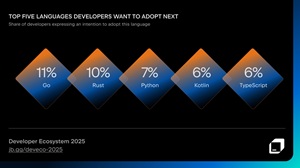 [Click on image for larger view.] Languages Devs Want to Adopt Next (source: JetBrains).
Key U.S. trends identified from the raw data, as presented by a spokesperson, include:
- AI leadership with caution: 91% of U.S. developers don't believe AGI will be developed in the next 10 years, and 17% think it may never be possible. 26% report feeling uncertain about AI's increasing role in society.
- New definitions of success: Developers are prioritizing adaptability, experimentation, and practical workflow integration over traditional career markers. 86% actively advocate for the developer tools and technologies they use within their organizations.
- The human side of tech: Rapid technological change brings real-world pressures, from balancing workload to maintaining well-being. 38% of U.S. developers work remotely, and 91% report their company allows work-from-home.
More information about the sprawling report is available in an accompanying blog post.
About the Author
David Ramel is an editor and writer at Converge 360.