News
Microsoft Reaches Second Milestone in Open-Source AI Editing for VS Code
Microsoft reached a second milestone in its plan to make Visual Studio Code an open-source AI editor, continuing the transition it first outlined earlier this year.
The latest update open sources the inline suggestions system responsible for code completions that appear as users type, expanding on the earlier decision to open source the Copilot Chat extension, Microsoft said in a Nov. 6 post.
This follows the first milestone reported in June, when Microsoft released its initial components for public development and transparency, a topic previously covered by Visual Studio Magazine (see "VS Code Goes Transparent as Open-Source AI Editor").
Inline Suggestions Now Open Source
Microsoft has made the inline suggestions engine open source, marking the next major step in its multi-phase effort to transition all AI-driven behavior in VS Code to community-visible development. The company noted that inline suggestions, formerly part of the GitHub Copilot extension, are now available in the Copilot Chat repository. This system powers ghost text suggestions and next edit predictions, both of which are used during regular code editing.
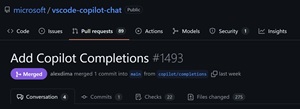 [Click on image for larger view.] Inline Suggestions Now Open Source (source: Microsoft).
Toward a Single Copilot Extension
The announcement states that Microsoft is working to consolidate all GitHub Copilot capabilities into the Copilot Chat extension. Historically, Copilot features were spread across two separate extensions: Copilot for ghost text and Copilot Chat for conversational features and next edit predictions. With most functionality now migrated into Copilot Chat, Microsoft has begun an experimental rollout that disables the original Copilot extension and routes all AI suggestions through the unified extension. The company plans to deprecate the standalone Copilot extension by early 2026.
Feature Behavior and Terminology Updates
To support the consolidation, Microsoft has standardized its terminology. The term inline suggestions is now used to describe all AI-generated completions that appear as users type, including both ghost text and next edit suggestions. This terminology update is paired with ongoing work to unify the user experience for different suggestion types, ensuring consistent timing and interaction patterns across the editor.
How Inline Suggestions Work
With the code now public, Microsoft detailed the architecture behind inline suggestions. The system includes:
Detection of whether the user is continuing an existing suggestion, allowing suggestions to persist without extra model requests.
Local caching of suggestion data to reduce latency when applicable.
Reuse of ongoing model requests across keystrokes when the context remains relevant.
Prompt construction that assembles file context, open documents, and workspace details to send to the model.
Inference logic that selects between ghost text and next edit predictions depending on cursor context.
Post-processing steps to apply correct formatting, indentation, and code style.
Multi-line intelligence to determine when multiple lines should be shown based on context and confidence.
Performance Improvements
Microsoft reported two main performance gains during the refactoring: reduced latency from networking fixes that speed up ghost text delivery, and quality validation work to prevent regressions in suggestion behavior. The company states that these improvements apply to the unified extension experience.
Troubleshooting and Rollback Option
Developers who encounter issues during the transition can revert to the previous two-extension setup by disabling the unification setting in VS Code. The company notes that the unified architecture is still under active refinement and that feedback is encouraged.
Next Steps for Open-Source AI Editing
The next phase of the effort will involve moving additional AI features from the Copilot Chat extension into VS Code core. Microsoft states that this work will continue to be developed publicly and documented through the project's iteration plans on GitHub. The team indicated that improvements to inline suggestions will continue, and community contributions remain welcome.
This milestone further advances the roadmap Microsoft shared earlier this year and follows the trajectory established in the initial transparency work. The company continues to position VS Code as an open-source AI editor with a growing set of community-visible components.
About the Author
David Ramel is an editor and writer at Converge 360.