News
Azure SDK to Add More Languages, Including Go
Microsoft's 2021 plans for the Azure SDK include adding codified support for more programming languages, with mobile iOS and Android libraries on tap in the draft guidelines stage, along with general-purpose languages C, C++ and even Go, the flagship programming language for cloud rival Google.
Those languages will join those that have already received general availability (GA) common design guidelines: .NET, Java, JavaScript/TypeScript and Python.
Microsoft said it's concentrating on developing first-party Azure SDKs that are:
- Idiomatic: SDKs are conventional with their target language and feel natural to developers.
- Consistent: SDKs are consistent across languages and services so that developers have a single experience and can support each other across development paradigms.
- Approachable: Great documentation, especially for first-time Azure users, is a priority to make getting started with Azure simple and quick.
- Diagnosable: Debugging is essential to the developer experience, and our libraries center discoverability and logging as fundamental features of each library.
- Dependable: Breaking changes are exceptions, not norms. Compatibility across library versions is a priority so that developers can seamlessly upgrade to the latest improvements.
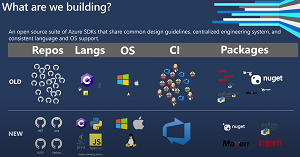 [Click on image for larger view.] Azure SDK (source: Microsoft).
For those wanting to explore the individual offerings, the full list will include:
Programming language guidelines are only a small part of Microsoft's wide-ranging plans for the Azure SDK in 2021, as outlined in a blog post this week.
"It's probably not a surprise that our goal for 2021 is to continue improving the developer experience for Azure users!" Microsoft said. "To that end, we plan to continue investing in languages and service libraries to provide greater coverage of Azure services. However, we aren't the group to ship-it-and-forget-it; this year will also see improvements to our documentation and getting-started guides, with an emphasis on helping you find the libraries and examples that will help you build solutions quickly and easily!"
Those libraries will build on myriad GA libraries the dev team has introduced since 2019 previews, mostly working remotely during the COVID-19 pandemic. Those range from Azure Storage to Cognitive Search to Text Analytics, with introduced beta packages ranging from Anomaly Detector to Event Grid to Tables.
The team has also released GA management libraries in Java and Python to cover Azure components including:
- Compute
- Cosmos DB
- DNS
- Key Vault
- Monitor
- Storage
"On a technical level, efforts to improve our libraries will likely include expansions to our mobile beta libraries; GA of some libraries such as Event Grid and Tables; and continued improvements to our already GA'd libraries, such as Storage, Text Analytics, Form Recognizer, and Metrics Advisor," the dev team said. "You can keep up with our plans through the github repos listed in the footer or follow us on Twitter, @AzureSDK."
About the Author
David Ramel is an editor and writer at Converge 360.