News
VS Code 1.127 Further Integrates Advanced Browser-AI Tech
Microsoft's latest Visual Studio Code update shows the editor's still-new integrated browser becoming more central to AI-assisted development.
The July 1 VS Code 1.127 release leads with that convergence, with Microsoft saying the update brings "agents that can build and test web apps in the browser, safer per-site browsing, and new ways to keep busy agent sessions organized."
The most notable change is that browser tools for agents are now generally available and enabled by default. Microsoft said those tools let an agent open pages in the integrated browser, read page content and console errors, take screenshots, select page elements, type into pages and navigate around a site "to verify its own work, all without an external MCP server."
That moves the integrated browser beyond a simple in-editor preview pane. It is increasingly becoming part of the AI coding loop: generate or modify code, run the app, inspect the page, see errors, interact with the UI and verify fixes without leaving VS Code.
The browser itself is also gaining more traditional browser capabilities. VS Code 1.127 adds per-site permissions for web APIs including geolocation, camera and microphone, sensors, clipboard, Bluetooth, USB, serial and HID. VS Code now prompts users to allow or deny access in a browser-like permission model.
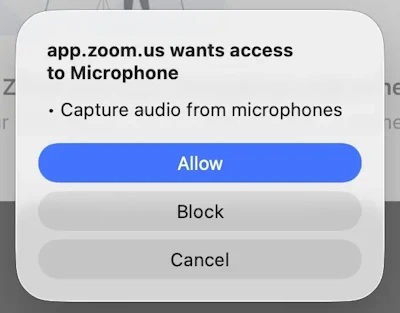 Browser Permission Prompts (source: Microsoft).
The update follows several recent browser-focused additions, including browser history, device emulation, web search from the address bar, remote browsing support and agent-browser sharing. In May, Visual Studio Magazine
covered that last feature in VS Code 1.119 Adds Agent Browser Sharing, OpenTelemetry Tracing, noting that it let agents request access to integrated browser tabs so they could inspect and interact with running web apps.
VS Code 1.127 suggests that work is moving from preview-level experimentation toward a more managed AI development environment. Browser tools are on by default, enterprises can govern them through policy, and Microsoft says organizations can restrict the domains those tools can access through network filtering.
Other parts of the release point in the same direction. The Agents window now supports grouping and drag-and-drop organization. Chat input banners can surface failing continuous integration checks and incoming pull request comments. Developers can see subagent credit usage on hover. Terminal command sandboxing is also rolling out on macOS and Linux to reduce approval prompts while limiting network and filesystem access.
Taken together, the release continues a clear pattern: VS Code is blending editor, browser, terminal, debugging, source-control and AI-agent workflows more tightly inside one environment.
The integrated browser is still relatively new in VS Code, but the pace of recent updates suggests Microsoft sees it as more than a convenience feature. With 1.127, it is increasingly positioned as a workspace where AI agents can see, test and interact with the applications they help developers build.
About the Author
David Ramel is an editor and writer at Converge 360.