
Microsoft says the beta is production-ready for many day-to-day workflows and CI pipelines.

Remember when you had to really dig in concentrate and understand exactly how C# and other code worked at the most basic levels? Then you'll like Microsoft's early preview of .NET 11.

At VSLive! Las Vegas, Mads Kristensen revealed Visual Studio 2027 as part of a broader shift toward AI-assisted development and a more continuous release cadence for Microsoft's flagship IDE.

Christian Wenz explains why the Backends for Frontends (BFF) pattern is emerging as a more secure authentication model for single-page applications.

Microsoft has released version 1.0 of its open-source Agent Framework, positioning it as the production-ready evolution of the project introduced in October 2025 by combining Semantic Kernel foundations, AutoGen orchestration concepts, and stable APIs for .NET and Python.
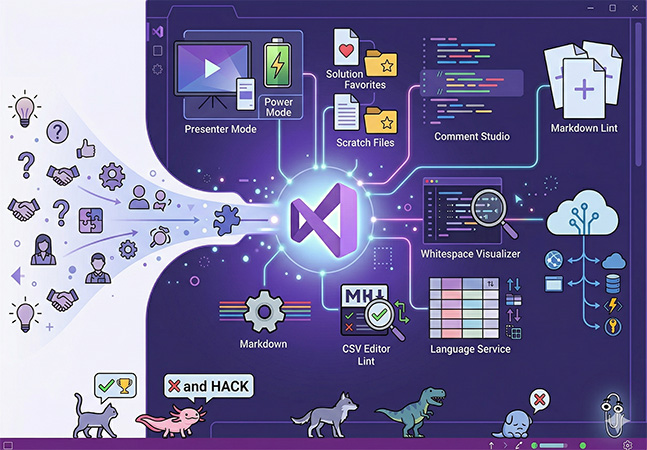
In a new video, Mads Kristensen walked through 10 extensions and updates aimed at common developer requests, spanning workspace modes, comment handling, scratch files, Markdown linting, CSV editing, Azure resource access and even animated pets.
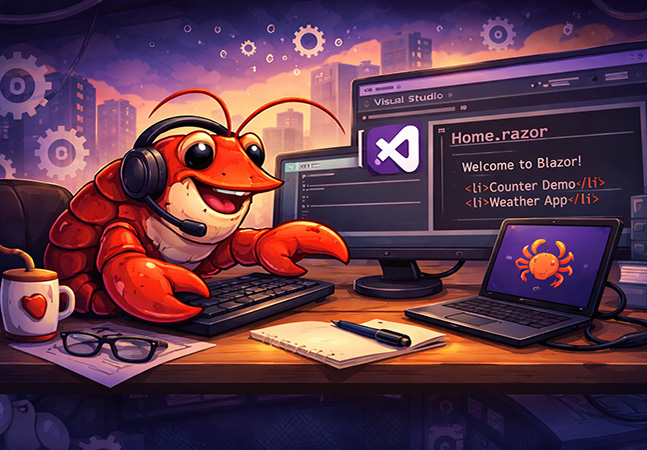
What happens when a self-hosted space lobster tries to work in Visual Studio 2026? OpenClaw finds terminal access, project insight, and just enough routing weirdness to send a message to itself instead of editing code -- which, honestly, is not not on-brand.
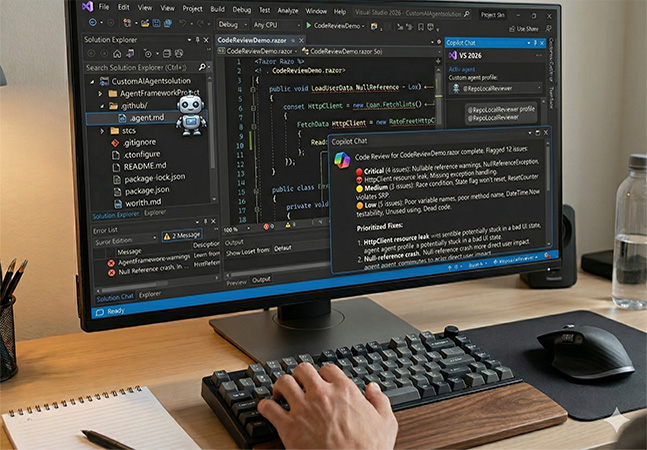
A quick hands-on proof of concept shows how Visual Studio's new custom-agent framework can be aimed at a real Blazor project, along with what else is new in the March update.

Microsoft has released .NET Aspire 13.2 with a new AI-focused CLI for coding agents, preview TypeScript AppHost support, dashboard updates, and revised integrations.

Microsoft released TypeScript 6.0 on March 23, the last version built on the original JavaScript codebase, with three post-RC changes and a wave of deprecations designed to ready codebases for the Go-based TypeScript 7.0.

Dr. James McCaffrey presents a complete end-to-end example of random forest regression to predict a single numeric value, implemented using C#. A random forest is a collection of basic decision tree regressors that have been trained on different subsets of the source training data. The technique reduces model overfitting to give more accurate predictions on new, previously unseen data.
- By James McCaffrey
- 03/18/2026
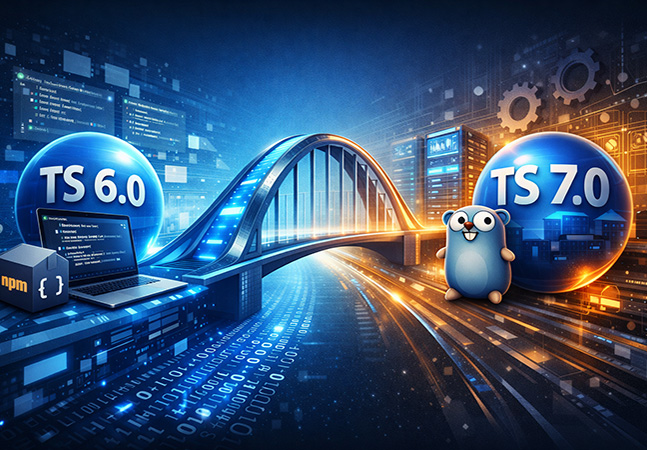
Release Candidate lands March 6, positioning 6.0 as precursor to native TypeScript 7.0 based on Go Language.

Microsoft updates its reference WinUI 3 sample app with taskbar integration, clipboard samples, and quality-of-life fixes.

VS Code's AI Toolkit and Microsoft Foundry can speed up agent development, but real-world success often depends on picking the right runtime and region, keeping tool-driven context under control, and designing around quotas, throttling, and uneven model/tool availability.
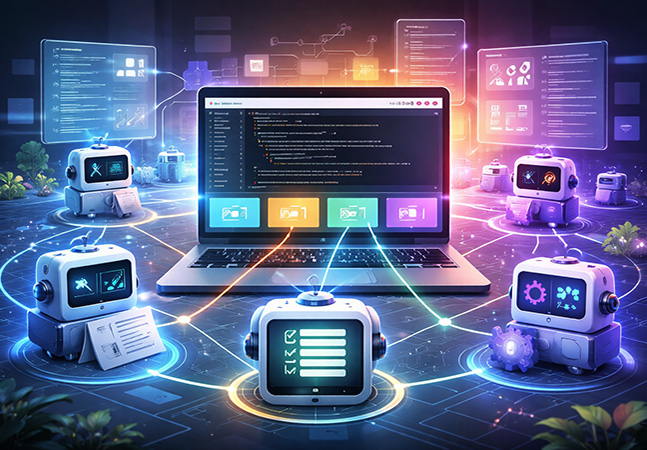
Microsoft introduces agent technology to Visual Studio, featuring curated assistants and personalized agent creation tools.
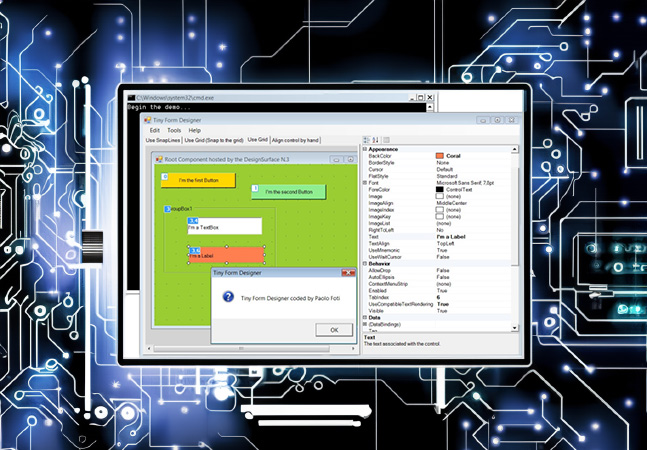
Microsoft's Visual Studio February Update (18.3) adds new Copilot agents and workflows for WinForms guidance, test generation, call stack analysis, profiling with unit tests, C++ modernization, and improved Razor Hot Reload behavior.

In a social media feedback thread started by Microsoft Visual Studio guru Mads Kristensen, multiple developers unloaded on the IDE's facility with AI provided by GitHub Copilot and other tools.
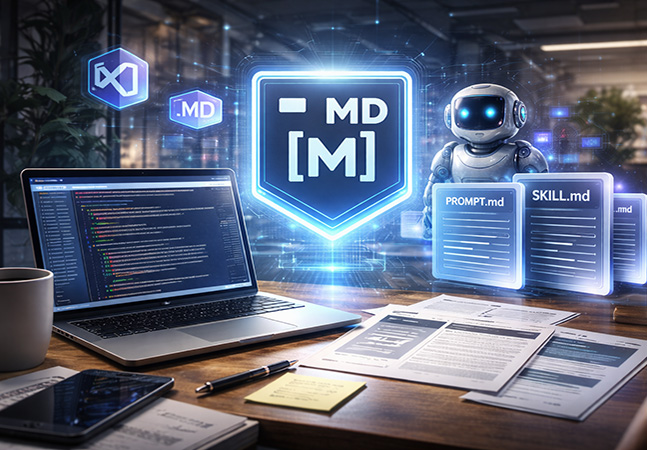
Markdown is emerging in VS Code and Visual Studio 2026 as a version-controlled instruction layer that governs AI agents, reusable prompts and modular skills alongside traditional documentation.
Microsoft MVP Philip Japikse discusses how ASP.NET Core Razor Pages in .NET 10 provides a streamlined, page-centric development model for building maintainable web applications, leveraging modern features like dependency injection, configuration management, and environment awareness .

Microsoft's .NET 11 Preview 1 introduces runtime and SDK enhancements while facing community scrutiny over C# syntax complexity and a strategic shift toward AI-driven development.