News
OpenSilver 2.0 Weds VB.NET with XAML for Web Apps
"For the first time, developers can use VB.NET and XAML to build web applications," exclaimed Giovanni Albani, CEO of Userware, in announcing the general availability of OpenSilver 2.0.
OpenSilver was created as an open source alternative to Microsoft Silverlight, a popular, cross-platform web application framework for creating multimedia-rich and interactive web applications that was discontinued by the company, causing much developer angst.
Applications created with OpenSilver run on all current browsers, including Chrome, Edge, Firefox and Safari, without the need to install a plugin. It leans heavily on XAML and includes features and functionality spanning panels/controls, Material Design, interop and more, including basic .NET constructs like these:
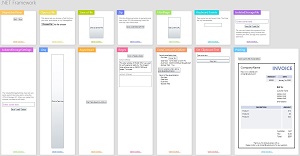 [Click on image for larger view.] .NET Framework Features in OpenSilver (source: Userware).
The Paris-based Userware was at the forefront of numerous efforts to replace the much-loved Silverlight, shipping OpenSilver v1.0 on Oct. 12, 2021, the last day of Microsoft's official support of Silverlight.
Two years later, v2.0 has arrived, with the VB.NET functionality heading the list of new features.
"OpenSilver 2.0 introduces support for VB.NET, allowing a wider range of developers to build web apps using their preferred language, Visual Basic, and XAML," the company said in a recent announcement. "This new feature offers a positive message to the Visual Basic community, giving reassurance that their preferred language holds firm ground in cutting-edge development environments. This update provides a much-needed option for those passionate about VB.NET to continue creating innovative web applications, or migrate legacy applications to the modern web."
Among more than 100 new features, highlights of the release as described by the company include:
- Business Application Project Template: Accelerating robust enterprise application creation with ready-to-use templates (RIA Services)
- Faster Simulator: Up to 10x speed improvement for swift development cycles and refined debugging
- Frameworks integration: Compatibility with Blazor, React, and Angular
- Open Source Sample CRM Application: An actionable, real-world example for developing business applications
- Design-time Live XAML Preview: Previewing UI changes without running the application
- Enhanced Layout System: Supporting custom layouts and third-party controls, including Telerik UI for Silverlight
Going forward, the company is eyeing a WYSIWYG XAML designer along with revamped documentation and augmented support for Windows Presentation Foundation (WPF), LightSwitch and F#.
It's also looking at unexplored domains like 3D and VR/AR on the web using .NET and XAML, providing a sneak peek of the preliminary support with the early-stage WebXR project.
More information about the new release is available in a video.
OpenSilver is free and open source software (FOSS) with source code available on its GitHub repo. While the project is predominantly maintains by Userware, the company also provides for-pay professional support and assists with the transition from legacy Silverlight and WPF applications.
About the Author
David Ramel is an editor and writer at Converge 360.